First-name initial signatures
One initial and a full surname: informal at the start, formal where it matters.
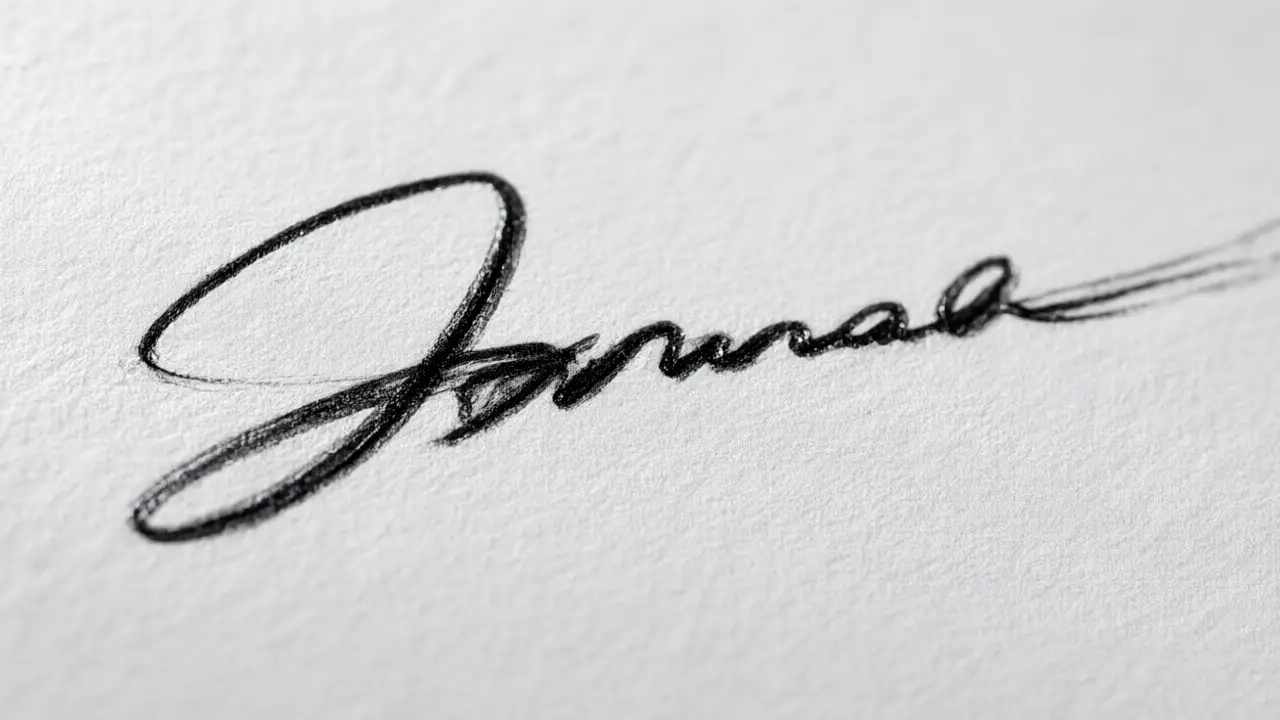
This is the most common working signature in the world for a reason: the initial is fast, the surname carries the identification, and the whole thing fits in a line without shrinking.
Which letters earn their place
Two letters is the usual answer, three when your name is common. First-name initial signatures work because the reader is not decoding anything: they are recognising a shape they have seen before, at the bottom of a page they already trust.
Give the initial some height and let the surname simplify after the first two letters. Nobody reads the last third of a surname in a signature; they read its length and its tail.
Make the short mark hard to copy
Anything short is quick to imitate, so the defence is not length but habit: an unusual join between the letters, a fixed baseline, a stroke that always ends in the same place. Consistency is the part a copyist cannot see.
It scales well. The same mark works on a contract, an internal approval and a delivery screen, which is exactly what you want from a signature you will use for years.
Where initials work best
Initials belong where space is short and repetition is high — initialling each page of a contract, marking a drawing, signing off an internal approval. For a first signature on a legal document, most people still want the full mark.
You can build any of these online: open the signature generator, draw or type your name, and place the result straight onto a PDF or Word file. Nothing is uploaded — the document never leaves your device.