Three-letter initial signatures
A middle initial adds separation when your first and last names are common ones.
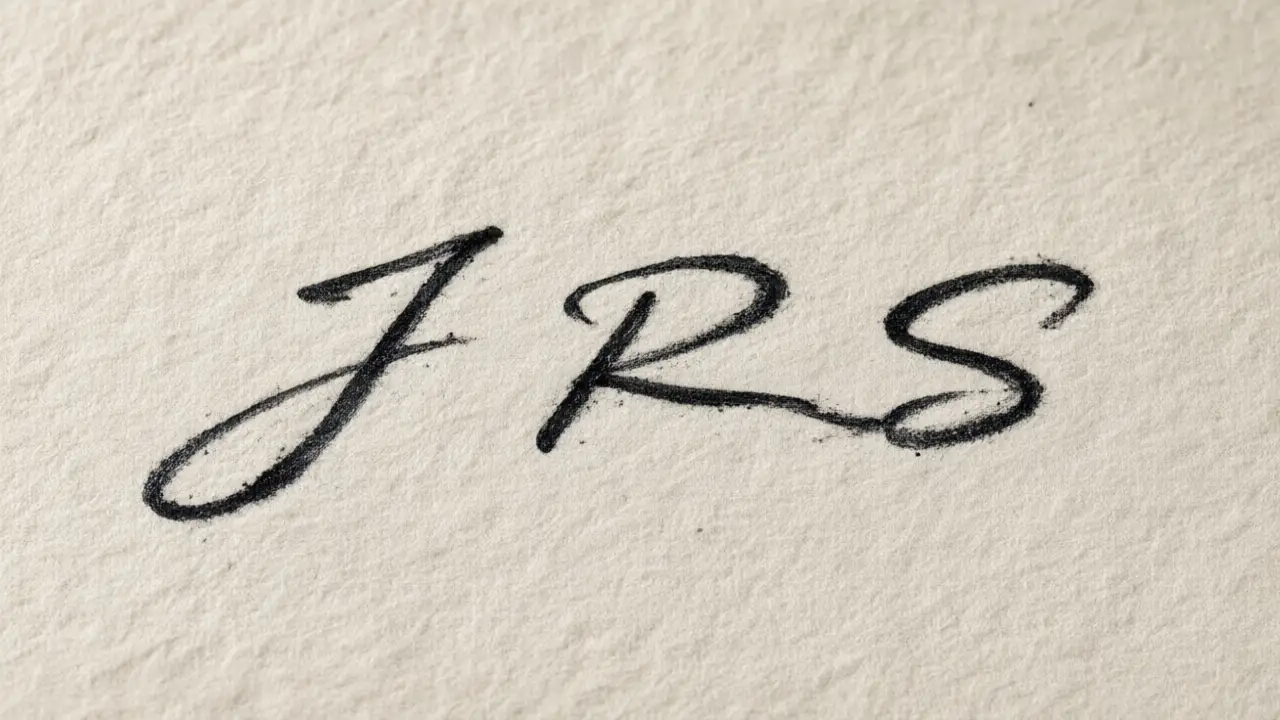
A third letter exists for a practical reason: it separates you from everyone else with the same common first and last name, which is a problem that surfaces in shared drives and approval chains more often than on paper.
Which letters earn their place
Two letters is the usual answer, three when your name is common. Three-letter initial signatures work because the reader is not decoding anything: they are recognising a shape they have seen before, at the bottom of a page they already trust.
Three letters need a plan or they queue up like a stamp. Usually one letter leads and the other two lean into it, so the eye reads a single shape rather than a row.
Make the short mark hard to copy
Anything short is quick to imitate, so the defence is not length but habit: an unusual join between the letters, a fixed baseline, a stroke that always ends in the same place. Consistency is the part a copyist cannot see.
Keep the spacing identical every time. In a short mark, spacing is most of the personality — change it and the same three letters read as someone else.
Where initials work best
Initials belong where space is short and repetition is high — initialling each page of a contract, marking a drawing, signing off an internal approval. For a first signature on a legal document, most people still want the full mark.
You can build any of these online: open the signature generator, draw or type your name, and place the result straight onto a PDF or Word file. Nothing is uploaded — the document never leaves your device.