Lawyer signature examples
A signature that has to hold up years later, on documents nobody expects to reread soon.
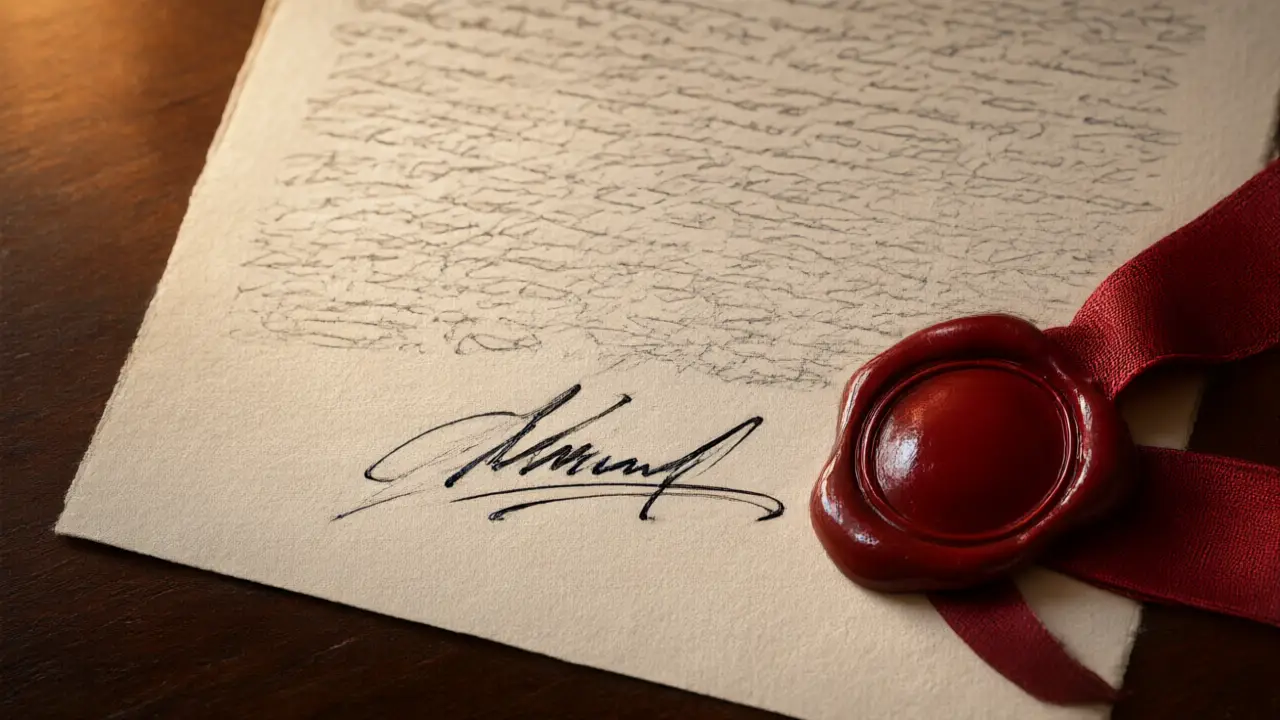
A legal signature is written knowing the document might be examined long after the signer has forgotten it exists. That expectation favours a stable, repeatable mark over an expressive one — consistency is what a signature needs when it may be compared against an old one years later.
What the document is asking for
Before copying anything, look at the space: a printed line, a grey box, a corner. Lawyer signature examples make sense against that space — the same mark that looks confident on a contract can look careless when it spills out of a form field.
Where a witness or notary block sits nearby, keep the signature inside its own field. Overlapping a witness line makes it unclear whose mark is whose once the page is scanned or photocopied.
Read the example, not the name
What is worth stealing from any example is never the name. It is the slant, the size of the first letter, how far the line travels after the last one, and whether the writer lifted the pen at all.
A full name, not initials, is the default for legal documents. Shortened signatures work for internal approvals, but an agreement meant to be enforced usually wants the complete, identifiable mark.
Rebuild it in your own hand
Write the shape you liked ten times with your own letters. The first three will look like an imitation, the last three like yours — and the version you can produce without slowing down is the one that belongs on a document.
You can build any of these online: open the signature generator, draw or type your name, and place the result straight onto a PDF or Word file. Nothing is uploaded — the document never leaves your device.