Business initial signatures
A quick mark for approvals and internal memos, distinct from the fuller signature used on contracts.
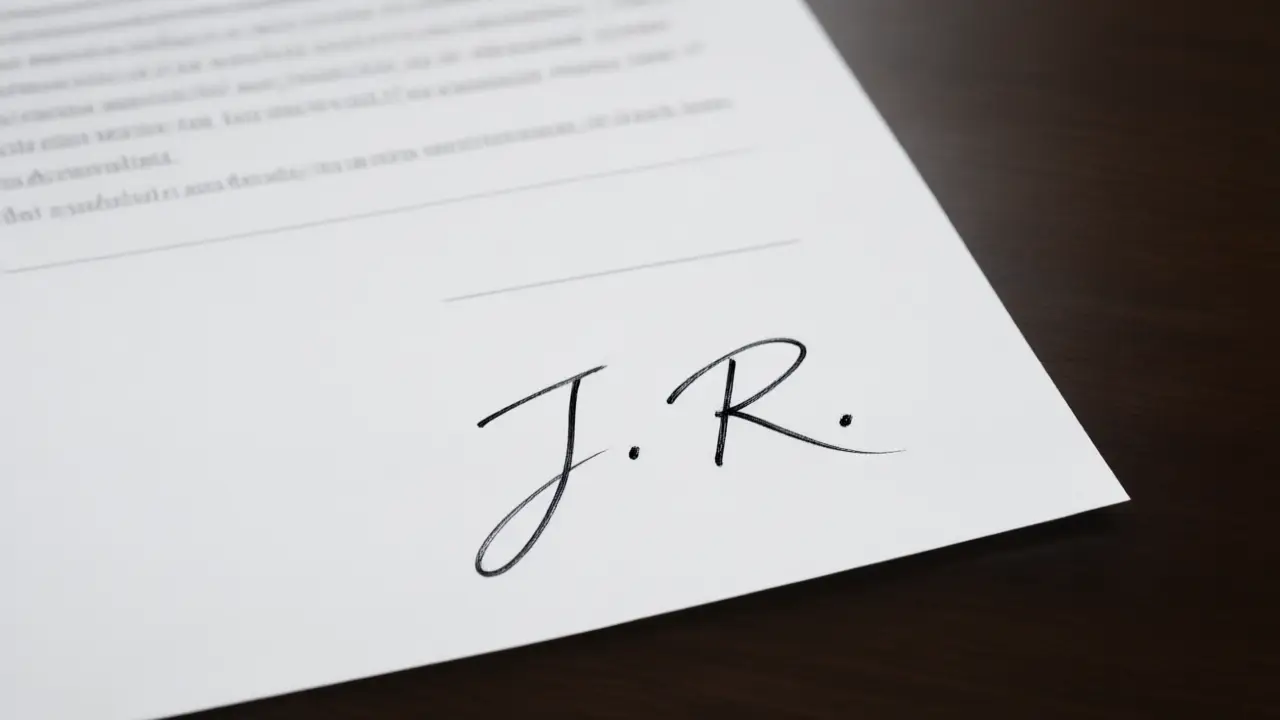
Many professionals keep two signatures without thinking of it that way: a full one for contracts and a set of initials for everything that moves faster — memo sign-offs, expense approvals, internal forms.
Which letters earn their place
Two letters is the usual answer, three when your name is common. Business initial signatures work because the reader is not decoding anything: they are recognising a shape they have seen before, at the bottom of a page they already trust.
The initials should still be recognisably related to the full signature — same slant, same general proportions — so nobody has reason to wonder whether the same person wrote both.
Make the short mark hard to copy
Anything short is quick to imitate, so the defence is not length but habit: an unusual join between the letters, a fixed baseline, a stroke that always ends in the same place. Consistency is the part a copyist cannot see.
Where a role changes often (approvals moving between managers, for instance), a business initial signature also has to stay legible enough that a name can still be traced back to it during an audit.
Where initials work best
Initials belong where space is short and repetition is high — initialling each page of a contract, marking a drawing, signing off an internal approval. For a first signature on a legal document, most people still want the full mark.
You can build any of these online: open the signature generator, draw or type your name, and place the result straight onto a PDF or Word file. Nothing is uploaded — the document never leaves your device.