Initial signatures after a name change
Combining a maiden and married surname without doubling the length of the mark.
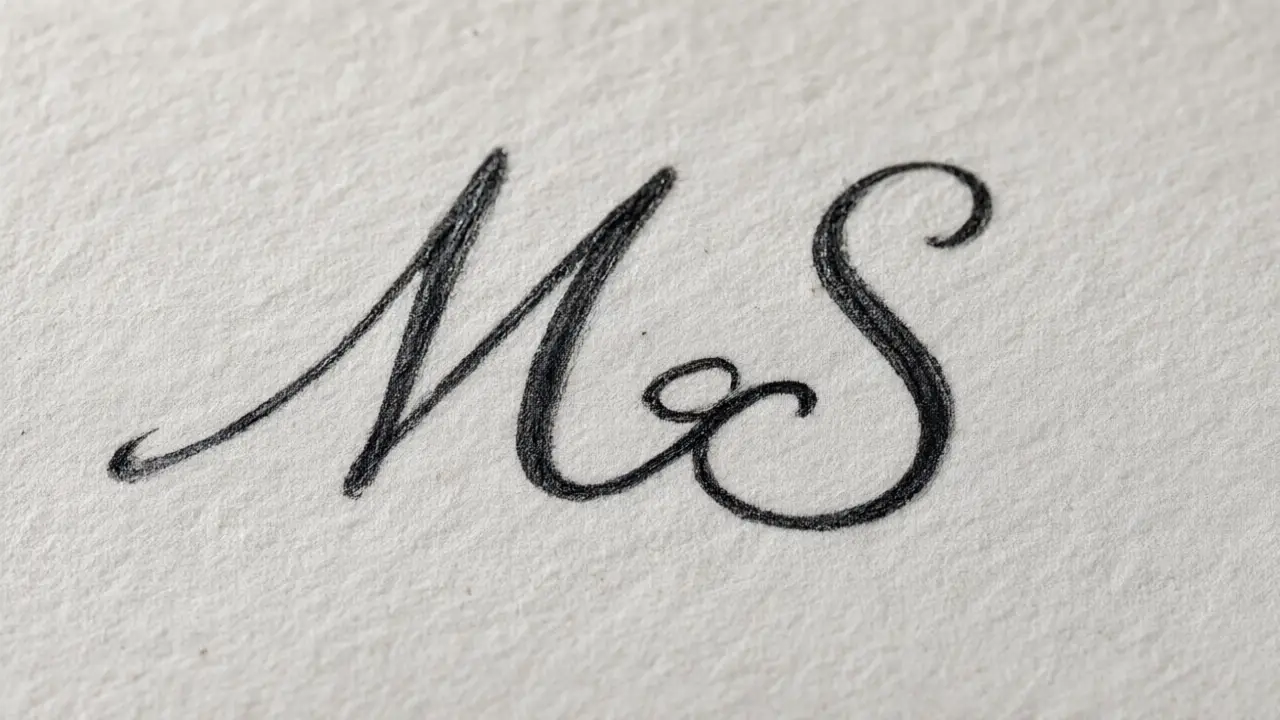
After a name change, many people keep the first initial from before and add the new surname’s initial beside it, rather than rebuilding the signature from nothing — it keeps a visual link to a mark that banks and old documents already recognise.
Which letters earn their place
Two letters is the usual answer, three when your name is common. Initial signatures after a name change work because the reader is not decoding anything: they are recognising a shape they have seen before, at the bottom of a page they already trust.
A small linking stroke between the two initials signals that they belong to one identity, not two names used interchangeably. Without it, the mark can read as uncertain about which name it represents.
Make the short mark hard to copy
Anything short is quick to imitate, so the defence is not length but habit: an unusual join between the letters, a fixed baseline, a stroke that always ends in the same place. Consistency is the part a copyist cannot see.
Update any signature on file — bank, employer, government ID — at the same time you start using the new mark. A signature that has changed but was never re-registered is the one that gets questioned first.
Where initials work best
Initials belong where space is short and repetition is high — initialling each page of a contract, marking a drawing, signing off an internal approval. For a first signature on a legal document, most people still want the full mark.
You can build any of these online: open the signature generator, draw or type your name, and place the result straight onto a PDF or Word file. Nothing is uploaded — the document never leaves your device.