Handwritten vs. typed signature
Both can be legally valid — the difference is mostly about what a reader trusts, not what a court requires.
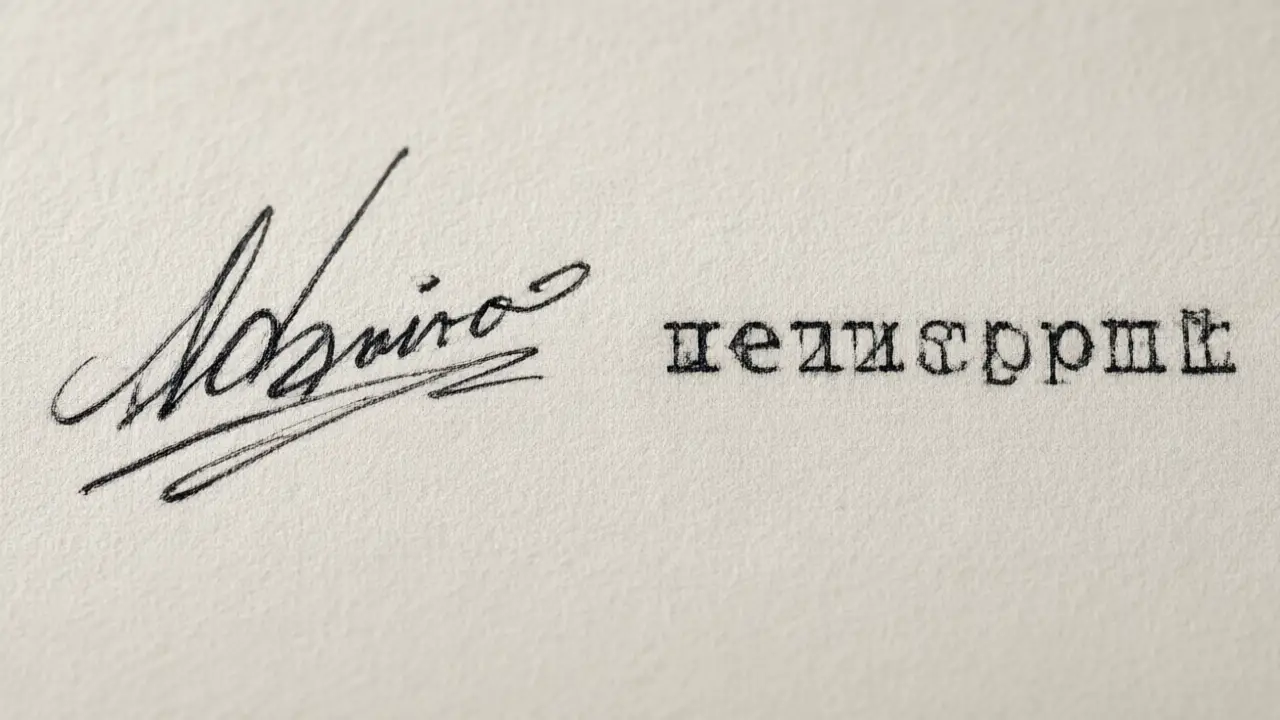
A typed name in a script font and a handwritten signature can carry the same legal weight in most everyday agreements — what usually matters is proof of intent and identity, not whether ink was involved.
Getting the mark off the paper
Write on unlined white paper with a dark pen, photograph it straight down in daylight, and let the background be as bright as possible. Handwritten vs. typed signature start here: everything the software can do later depends on this one clean capture.
The practical difference is trust at a glance. A typed name in a signature font is instantly recognisable as generated text; a handwritten mark, even a simple one, reads as something a specific person actually did.
Placing it on the document
The finished signature should be a transparent image, cropped close, sized to the signature line rather than to the page. A white rectangle around it is the single most common giveaway that a signature was pasted in.
For anything sent to a client or counted on to look considered — a contract, a formal letter — a handwritten signature is worth the extra minute. For an internal form nobody will scrutinise, a typed name is often enough.
What makes it hold up
What usually matters in a dispute is not the beauty of the mark but the trail around it: who sent the file, when it was signed, from which address. The drawn signature is the visible part of a much longer record.
You can build any of these online: open the signature generator, draw or type your name, and place the result straight onto a PDF or Word file. Nothing is uploaded — the document never leaves your device.